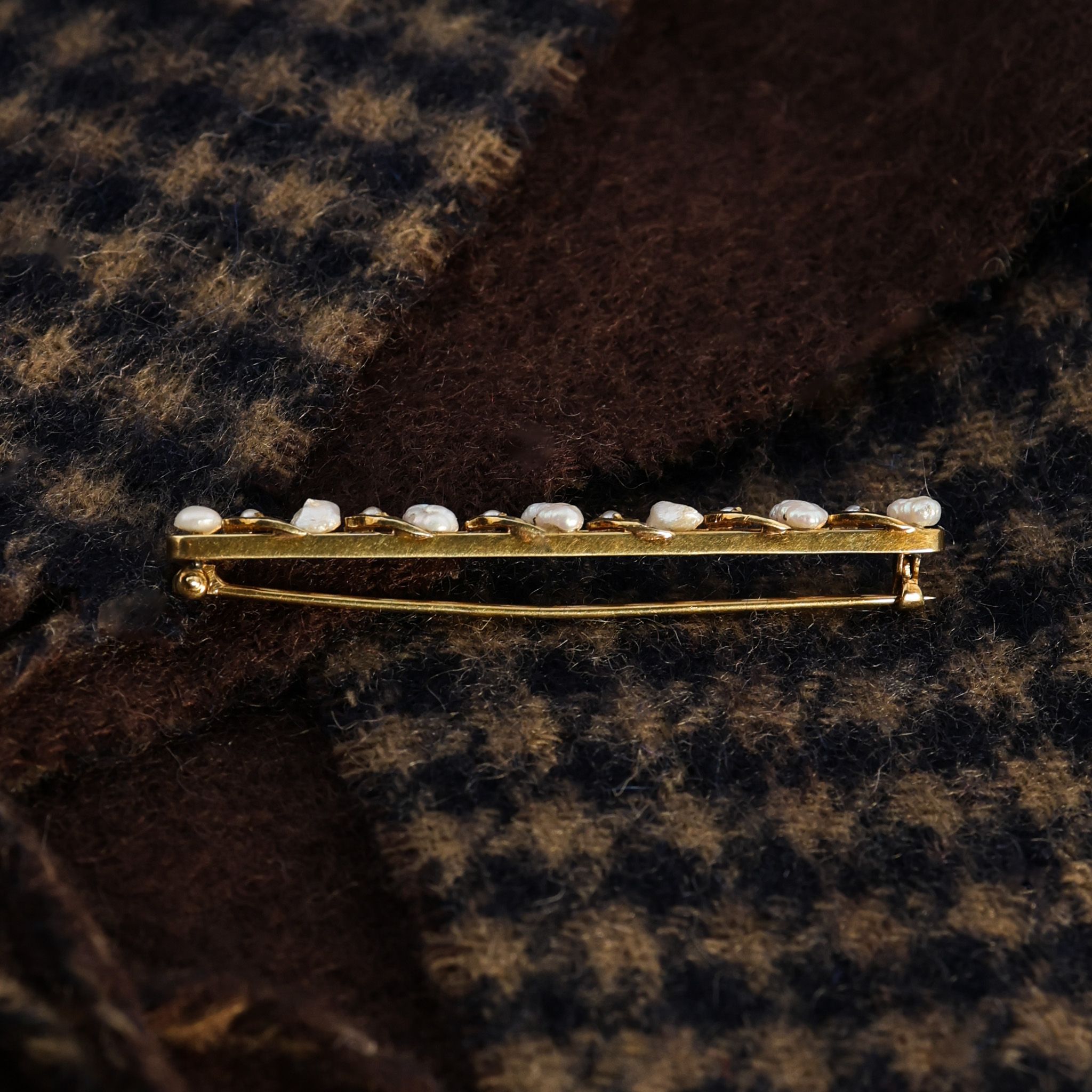
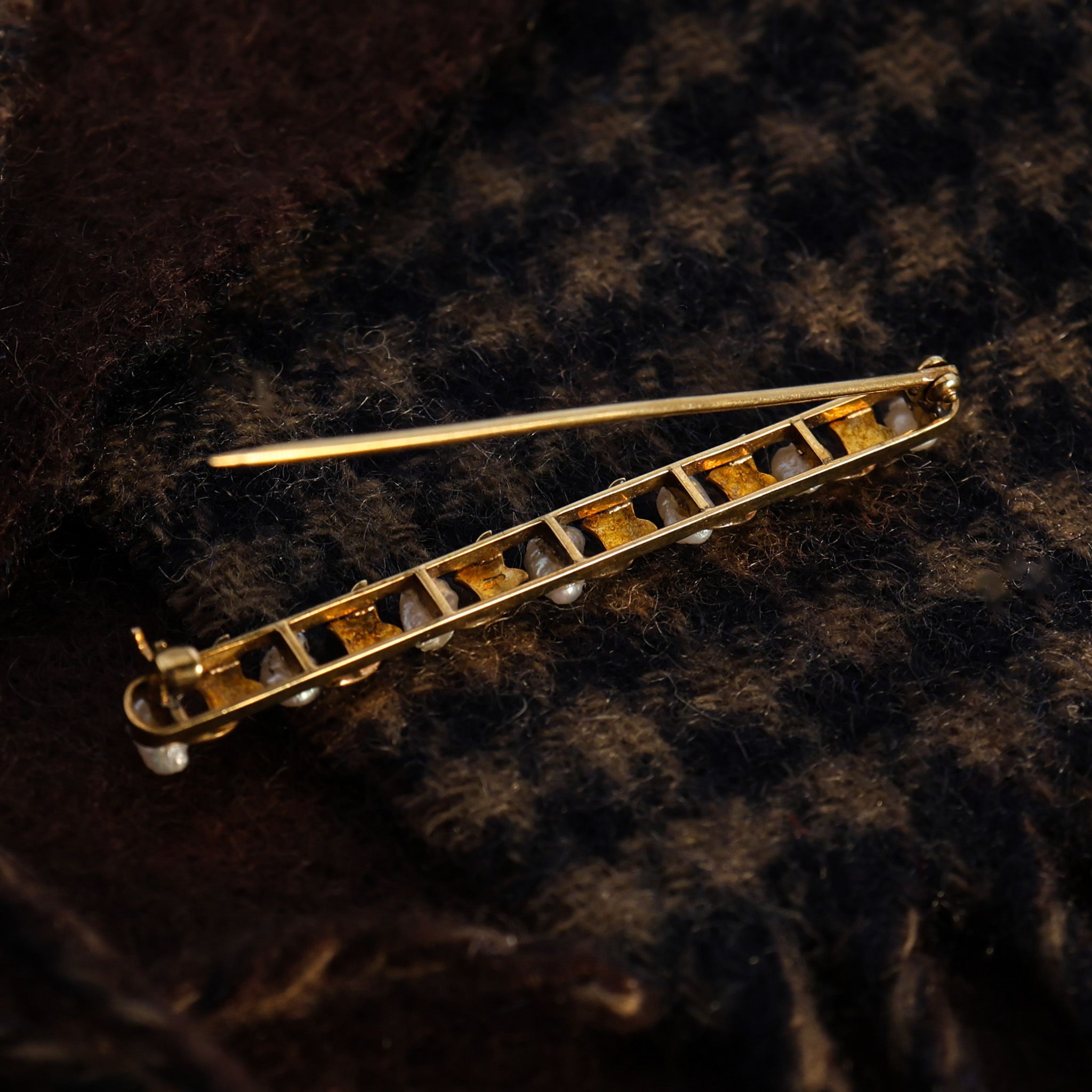
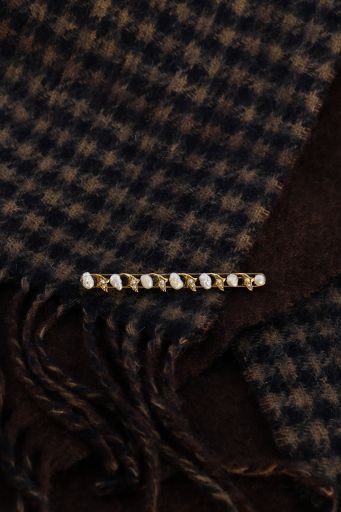
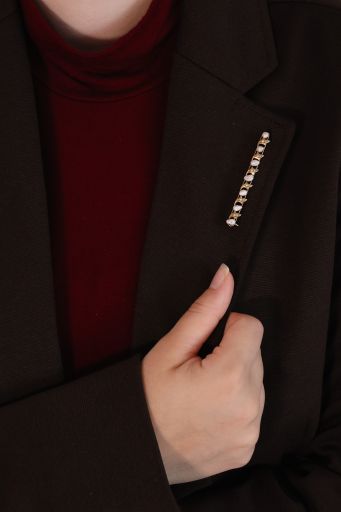
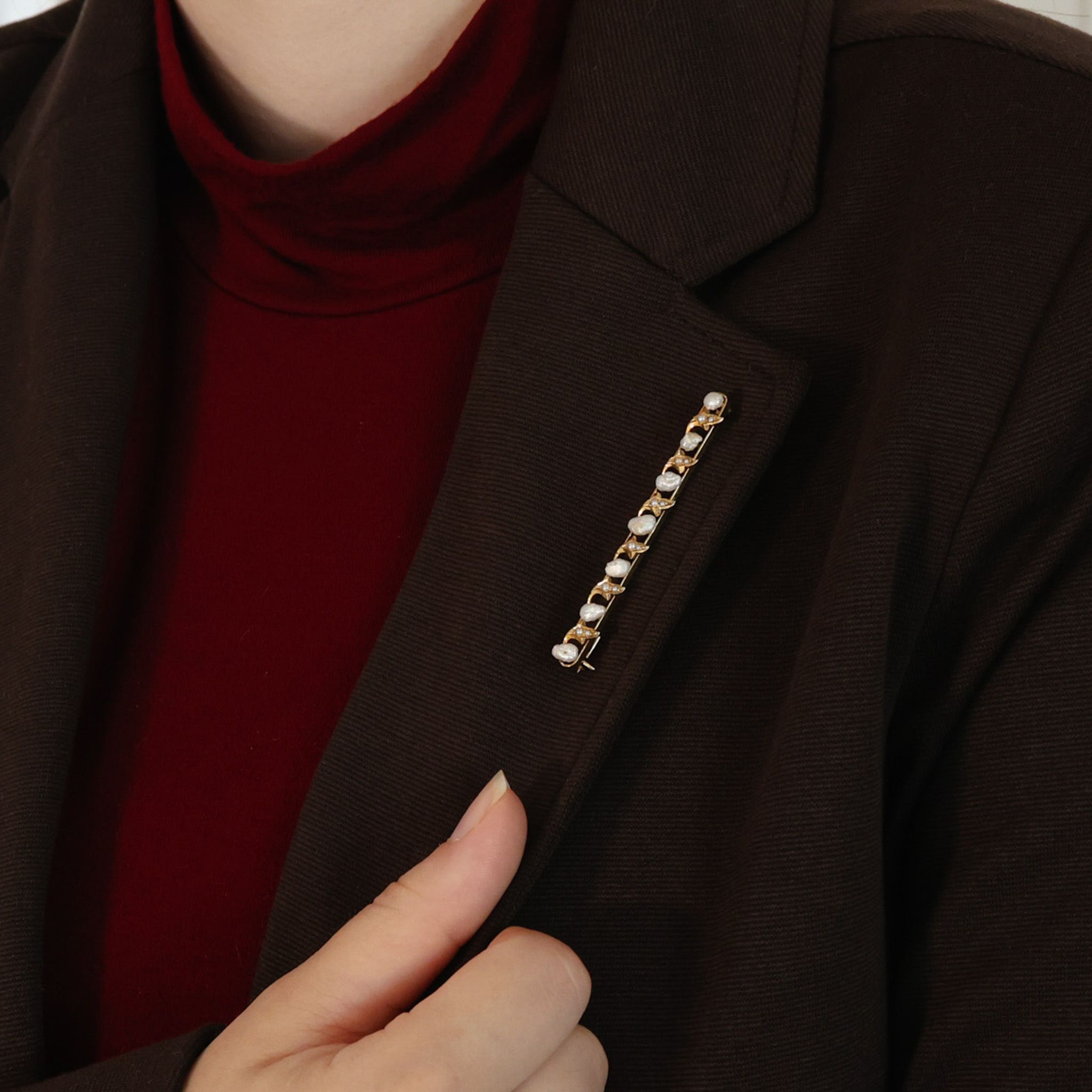
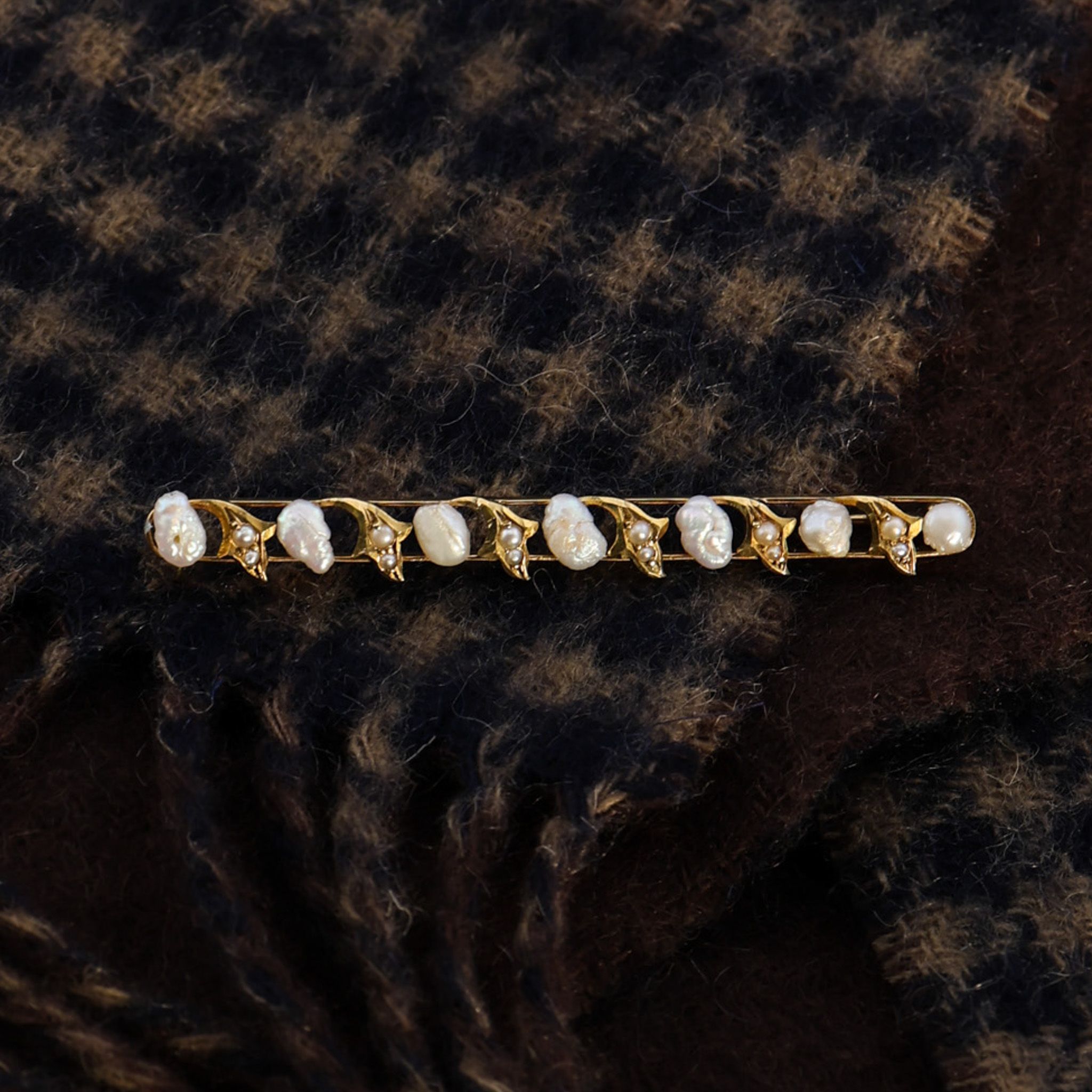
14ky Nouveau Pearl & Ivy Bar Pin

$1,200.00 (CAD)
Add to Cart
Pay over time with or Qualify at checkout.
Pieces are exchange only.

Details

Material
14k Yellow Gold
Pearls
Rice Pearls, Seed Pearls
Size
59.95mm x 4.70mm
Condition
Good

Contact us to us if you want more details about this piece

Want to try it on? Come visit us at Halifax, NS

Created:2026/08/30 14:44
About

Art Nouveau Era

(1890 - 1910)
Brought to life by the reopening of trade with the East in 1858, art nouveau was inspired by the elegance of Japanese artwork. It had an influence on those looking to move forward from the aesthetics of the Victorian Era to the new, decorative style.

In response to poorly made, mass-produced Jewellery that took flight in the Victorian Era, the Arts and Crafts movement emerged. This provided the base that would support new ideas in the arts, including jewellery. Moving towards handcrafted goods and Japonisme (Japanese art & design), the two became the face of the Art Nouveau Era. The “whiplash” line, a free-flowing line used to suggest movement in jewellery, was one of the most prominent motifs of the era. It was used to depict plants, a woman’s hair- essentially any moving part of nature. Recurrent themes included insects, notably dragonflies and butterflies. Plique-A-Jour enamel became popular and was used to provide colour and life to pieces. This enamel style was akin to stained glass windows, with transparent enamel outlined by gold or silver. Art Nouveau jewellers loved the idea of the female form being combined with elements from nature, such as a woman with butterfly wings. Trailblazing jewellers such as Tiffany, Rene Lalique, and Henri Vever dominated the unique style of this era. The aftermath of World War I had the public leaning away from natural lines, and towards the sharp angles of Art Deco. Although short lived, the Art Nouveau era is remembered for its innovation and craftsmanship.

Browse other pieces in our collection

Pearl - Calcium Carbonate

Developed inside the soft tissue of a living shelled mollusk, pearls are hard and lustrous. First used as jewellery in 420 BC, the sarcophagus of a Persian Princess from that time was found wearing a fragment of pearl jewellery. Although round is considered the preferred shape, pearls come in a multitude of silhouettes. Baroque pearls are irregular, non-spherically shaped and make up most of the cultured freshwater pearls we find today. There are four main cultured pearl varieties. Akoya pearls are saltwater pearls that are white or cream with some hints of pink and green. Tahitian pearls are saltwater pearls that range in colour from eggplant purple, peacock green, metallic grey and greyish blue. They are found in Tahiti and generally range from 7-12mm. South Sea pearls are saltwater pearls that can come in a variety of silver, white or golden and are commonly sourced along the northwest coast of Australia. Ranging from 8-16mm, they have been known to reach up to 20mm. Freshwater pearls are typically cultured in lakes and ponds and come in a wide range of shapes, sizes and colours. Pearl is the birthstone for June and ranks between 2.5-4.5 on the Mohs hardness scale.
Browse other pieces in our collection More Pearl pieces

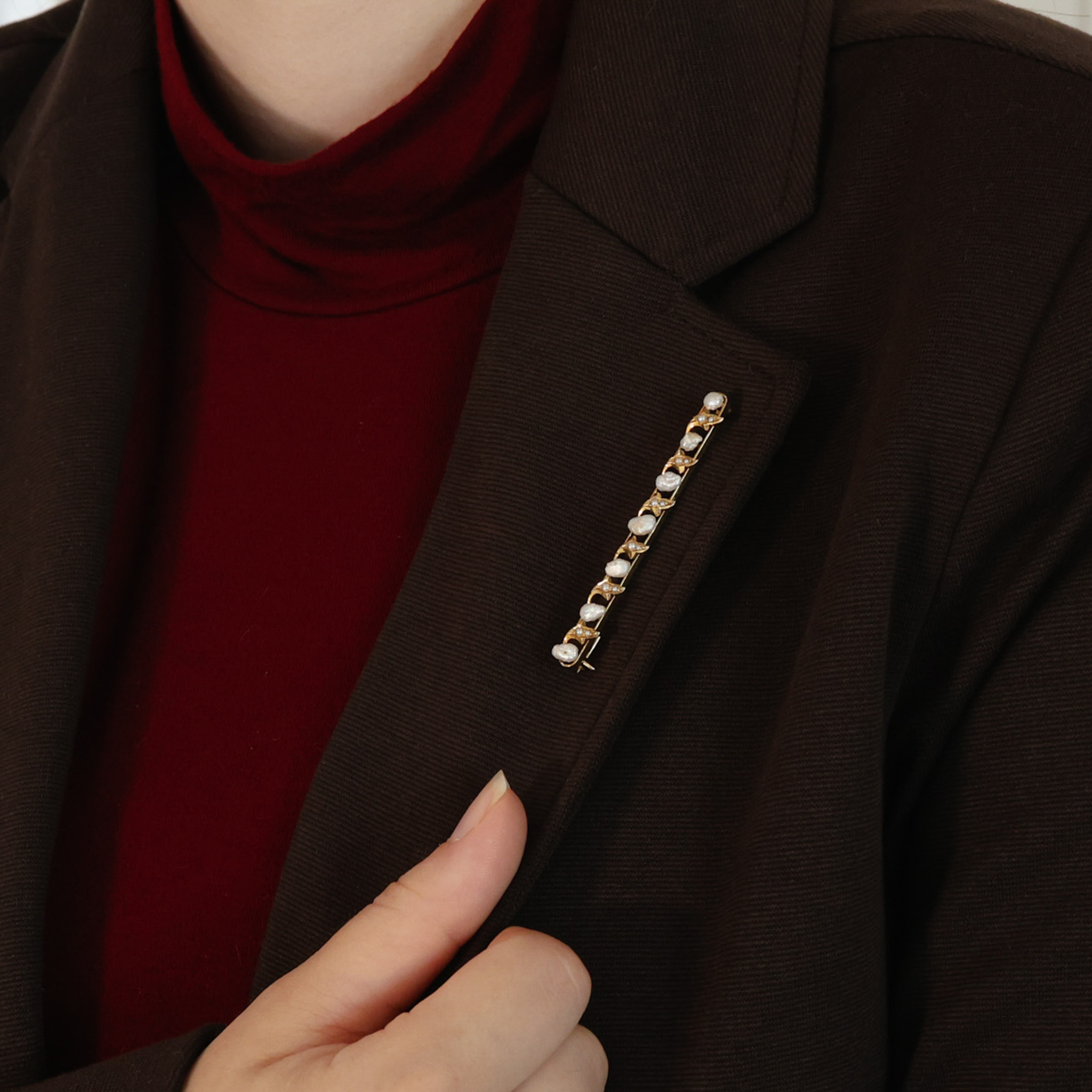
14ky Nouveau Pearl & Ivy Bar Pin
$1,200.00 Add to Cart
Legal & Disclosures Purchases Shipping Terms & Conditions Privacy Policy Unsubscribe
Copyright © 2026