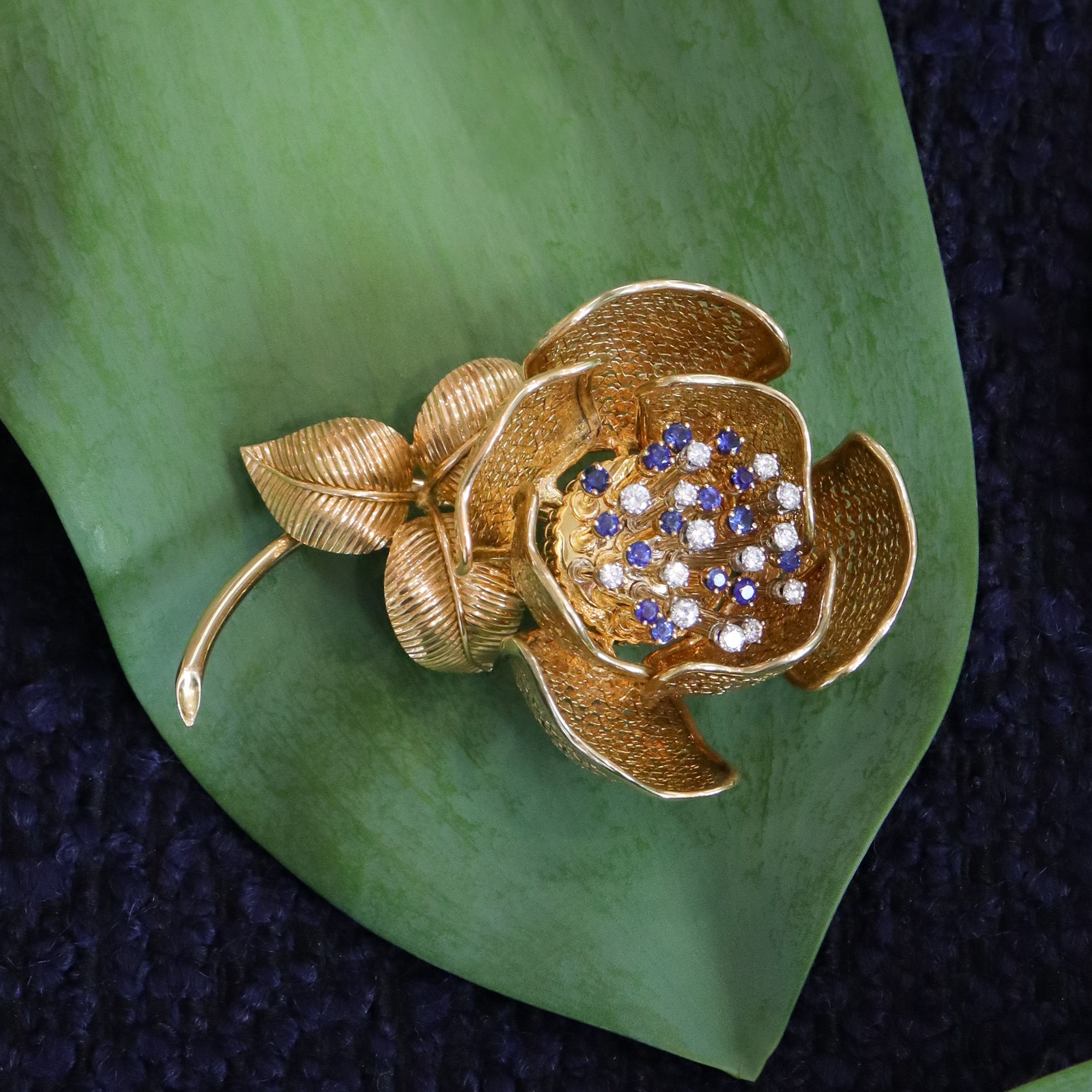
18ky Sapphire & Diamond Articulated Flower Brooch

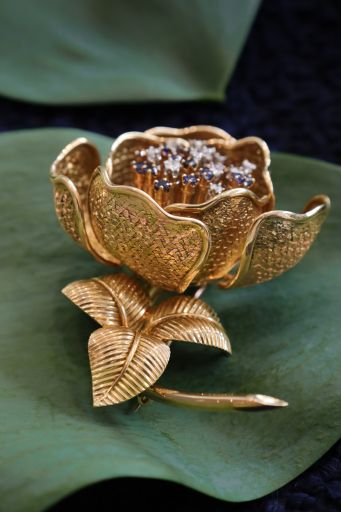
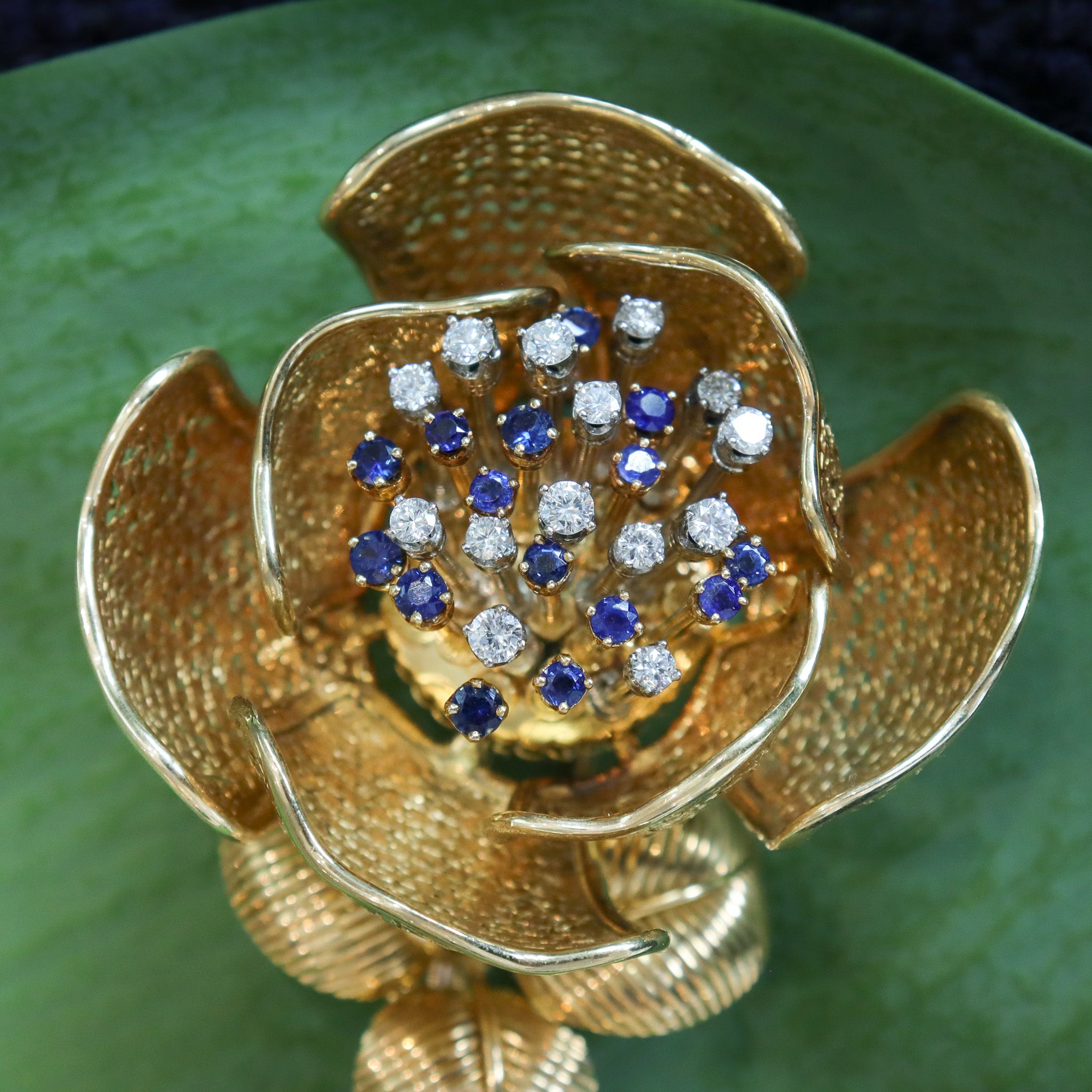
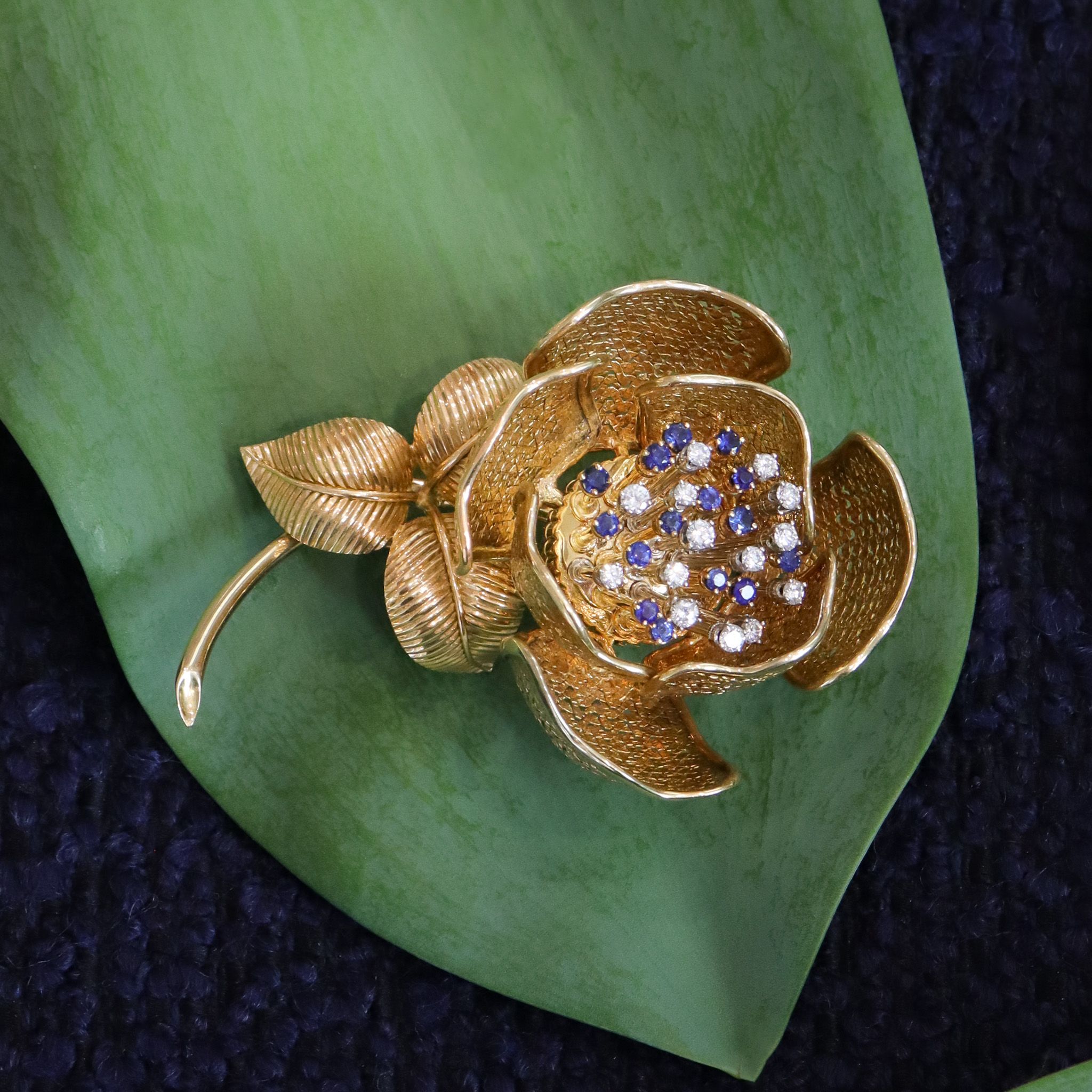
A breathtakingly beautiful articulated flower brooch. This masterpiece blooms- the flower moves from a bud to a fully opened blossom. The gemstone encrusted, flowers centre vibrates and shimmers with the wearers movement. Fabricated by the late master goldsmith Roy King, this brooch is a stunning example of his attention to detail. His career includes commissioned pieces for Cartier, Rolex Omega. A truly exceptional piece of high jewellery.
Details
Contact us to us if you want more details about this piece
Want to try it on? Come visit us at Halifax, NS
Retro Era
(1940 - 1950)During this Era, platinum and precious metals were once again rationed for the war effort, thus making yellow gold the choice of metal for the time. Additionally, various alloys, like copper, were used to create thinner sheets of metal, which gave jewellers a chance to experiment with new finishing techniques. During the retro era, gemstones were in short supply, which allowed metalwork to take the spotlight. When gemstones were used in jewellery pieces, goldsmiths capitalized on inexpensive stones, such as topaz, amethyst, aquamarine, and citrine. Expensive stones like diamonds were reserved for pavé settings and accent stones. Moreover, it was common during this time for people to commission a bespoke piece using metals and gemstones that they had previously owned, as it reflected the financial scarcity of the time.
Regarding jewellery design, larger silhouettes were often preferred in cocktail rings, necklaces, and bracelets. Engravings of scrolls, fans, and flowers contrasted with the geometric lines of the previous Art Deco Era. Snake chains grew in popularity as they represented a large, bold look without using copious amounts of metal. As the Art Deco era came to a close, society took a step towards the modern styles we see today, as people had already begun to view the Art Deco style as distastefully luxurious, an outdated concept following the start of World War II.
Sapphire - Corundum