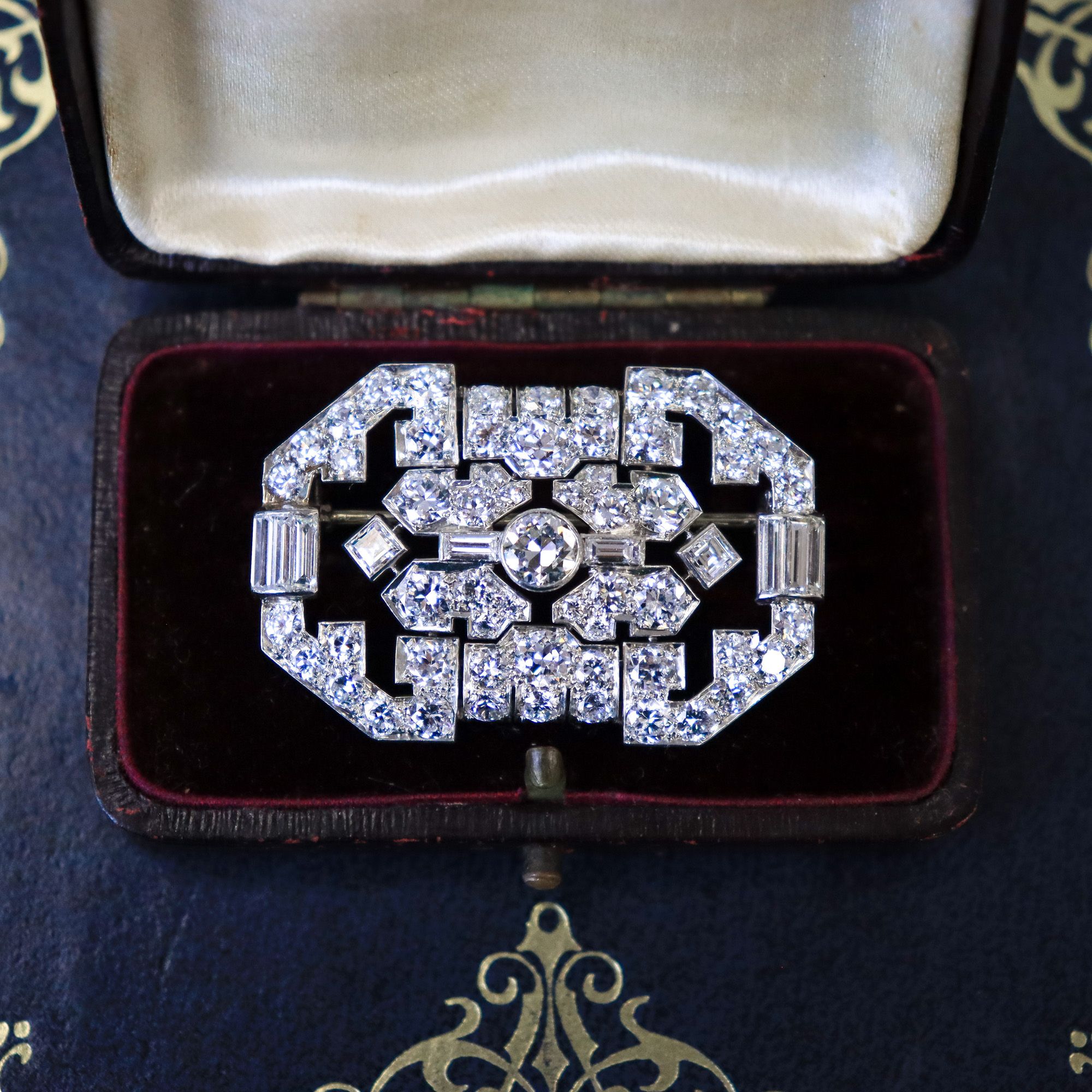
French Platinum Art Deco 6ct Diamond Brooch

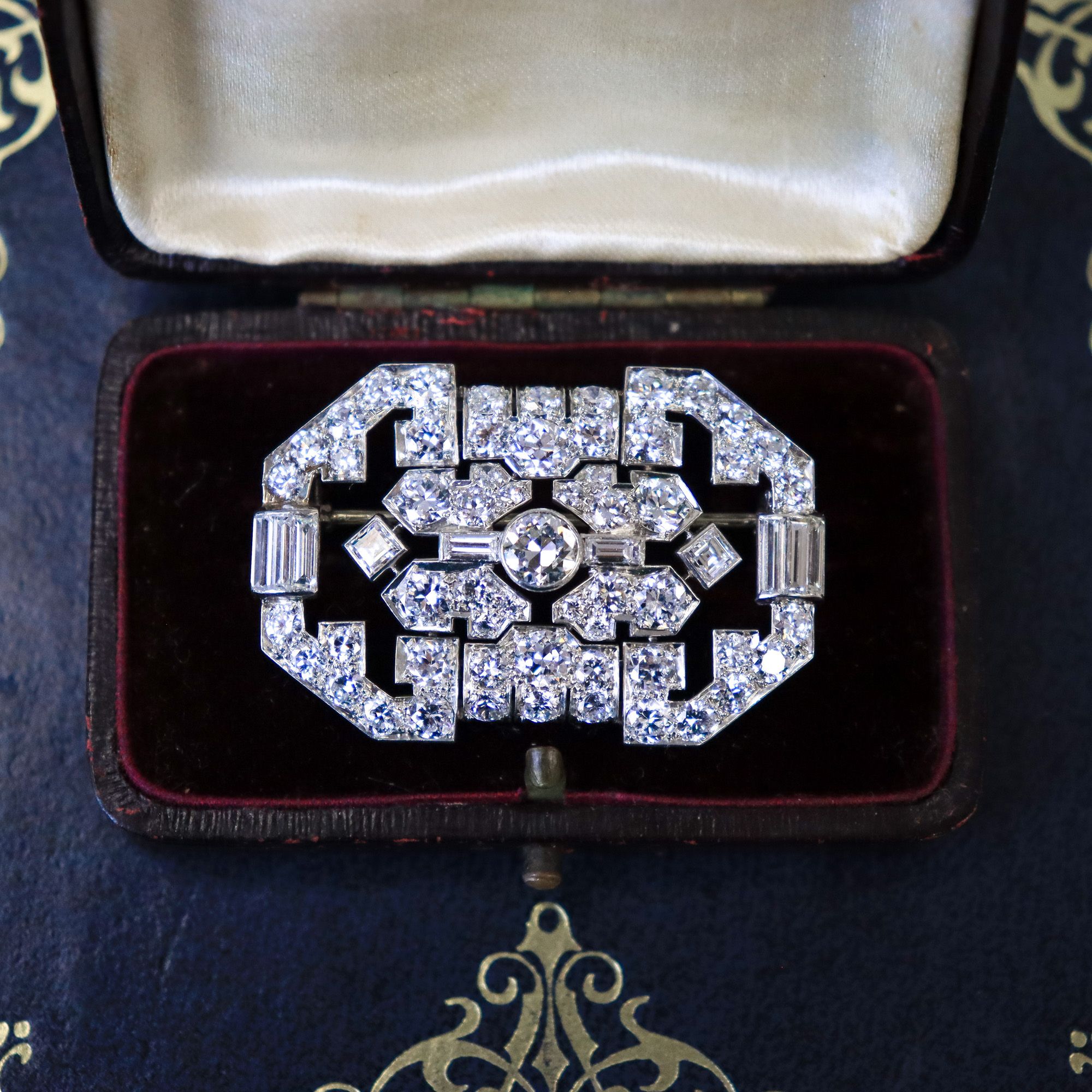
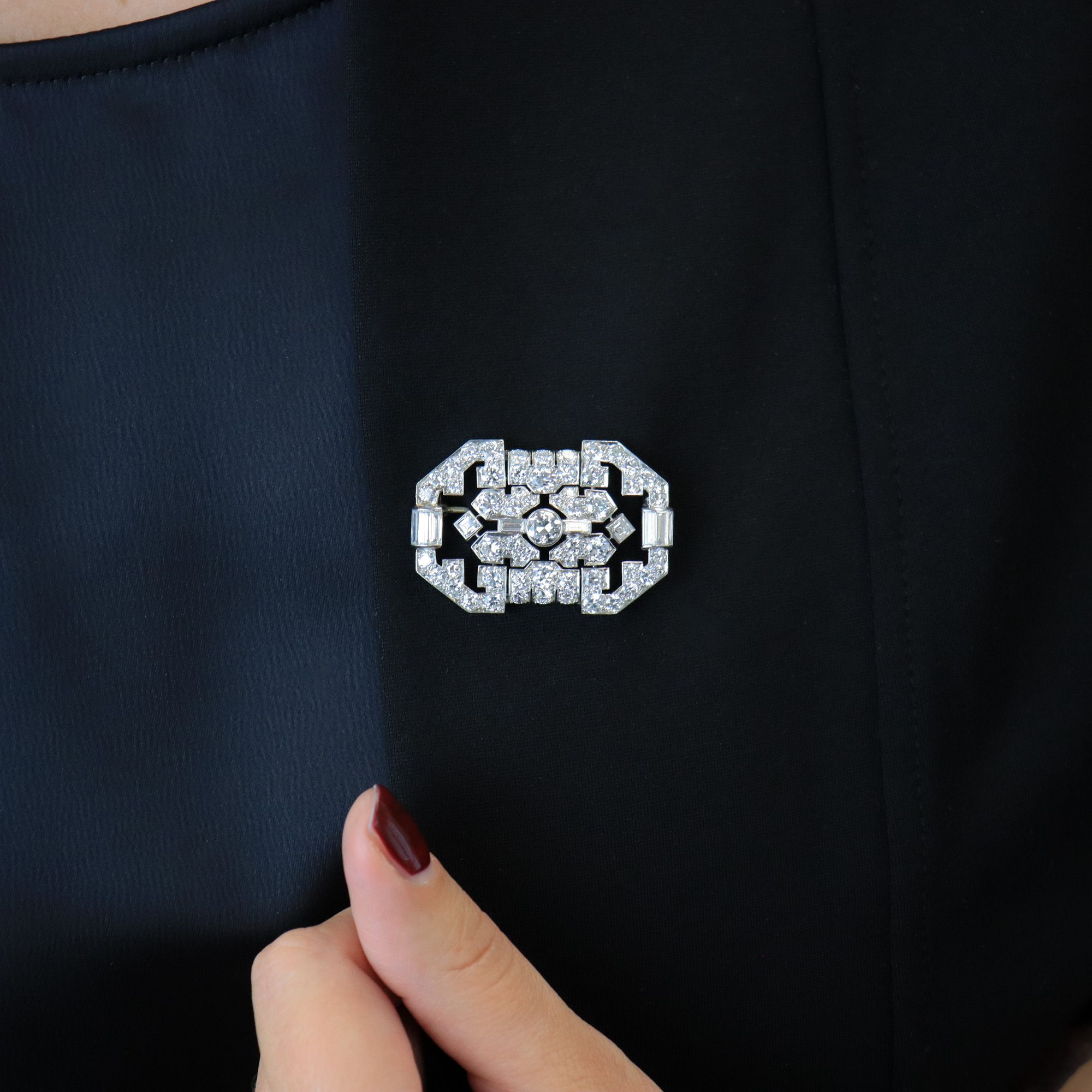
Diamonds are all that you can see in this platinum antique brooch. The symmetry and clean lines just scream "Deco", and hallmarks on the stem tell us this was originally made in France. Photos don't do this piece justice; the sparkle in-person is phenomenal!
 or
 Qualify at checkout.
Details
Contact us to us if you want more details about this piece
Want to try it on? Come visit us at Halifax, NS
Art Deco Era
(1919 - 1939)Hexagonal settings, cocktail rings, and basket settings were all the rage in the Deco Era. During this time, the “Mystery setting” was developed by Van Cleef & Arpels. This technique entails making sure each stone is custom cut to fit perfectly and securely within its metal framework. Without any visible claws showing, the invisible setting provides a seamless design. "Calibre-cut" stones was another technique developed by gem cutters during this era. These specially cut stones were made for the geometric designs or “mosaic” designs of the era.
Long and layered pearl necklaces were in high demand, especially pieces with intricate, gemstone-embellished clasps that were worn in the front. Onyx, diamonds, aquamarines, and rubies were the key stones of the 20s, and were typically used as a clean contrast to gold. After the creation of 18k white gold, this material was often combined with platinum after the First World War. The sturdiness of platinum meant safe gem coverage, while the white gold offered affordability to the buyer. As such, rings often had white gold bands and a platinum setting for the stone(s).
The discovery of King Tut’s tomb in 1922 prompted inspiration for jewellery stores to include Egyptian-Style pieces, like scarabs, in their collections. Notably, Cartier fabricated jewellery made from antique Egyptian treasures as a way to display real-life archaeological finds.
Diamond - Carbon