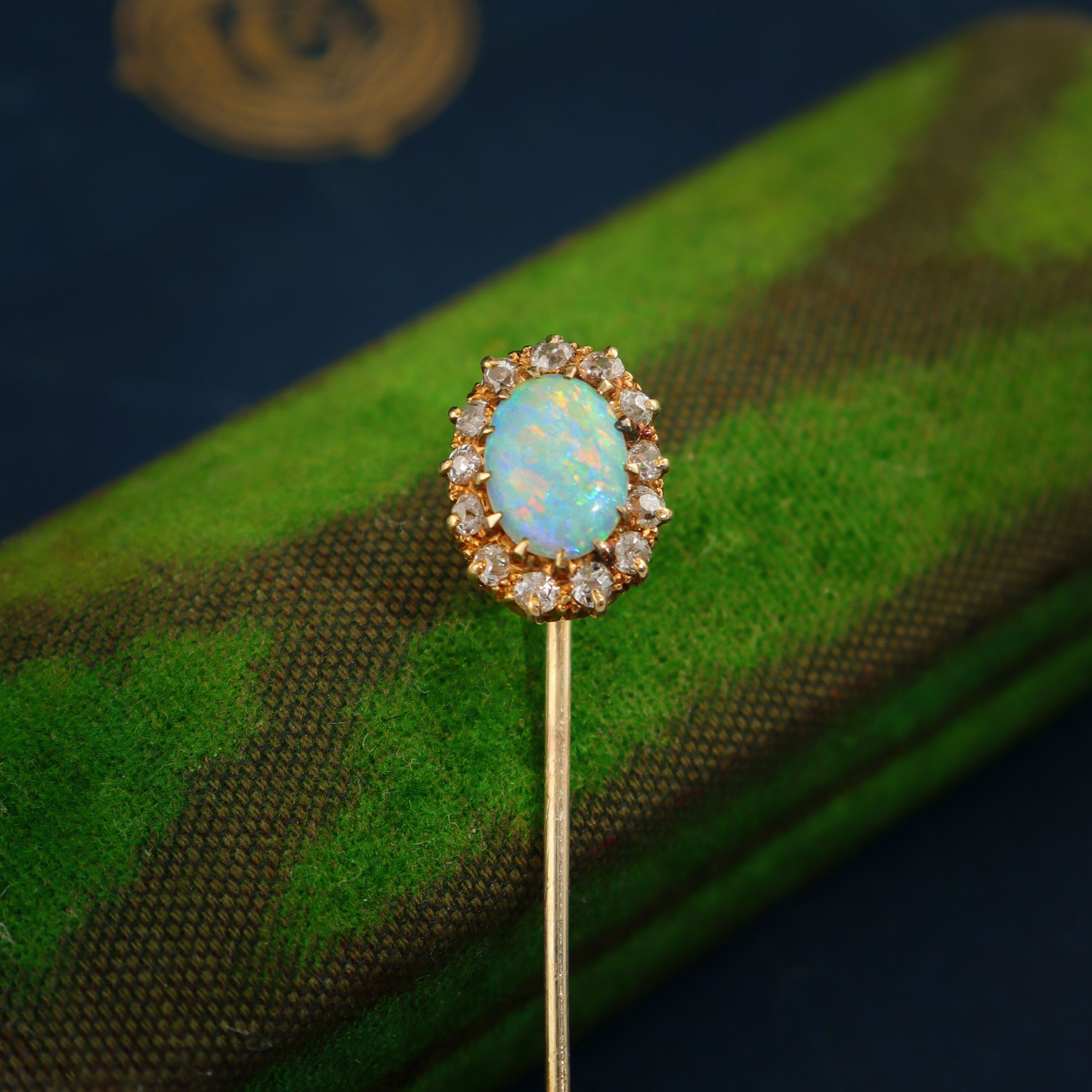
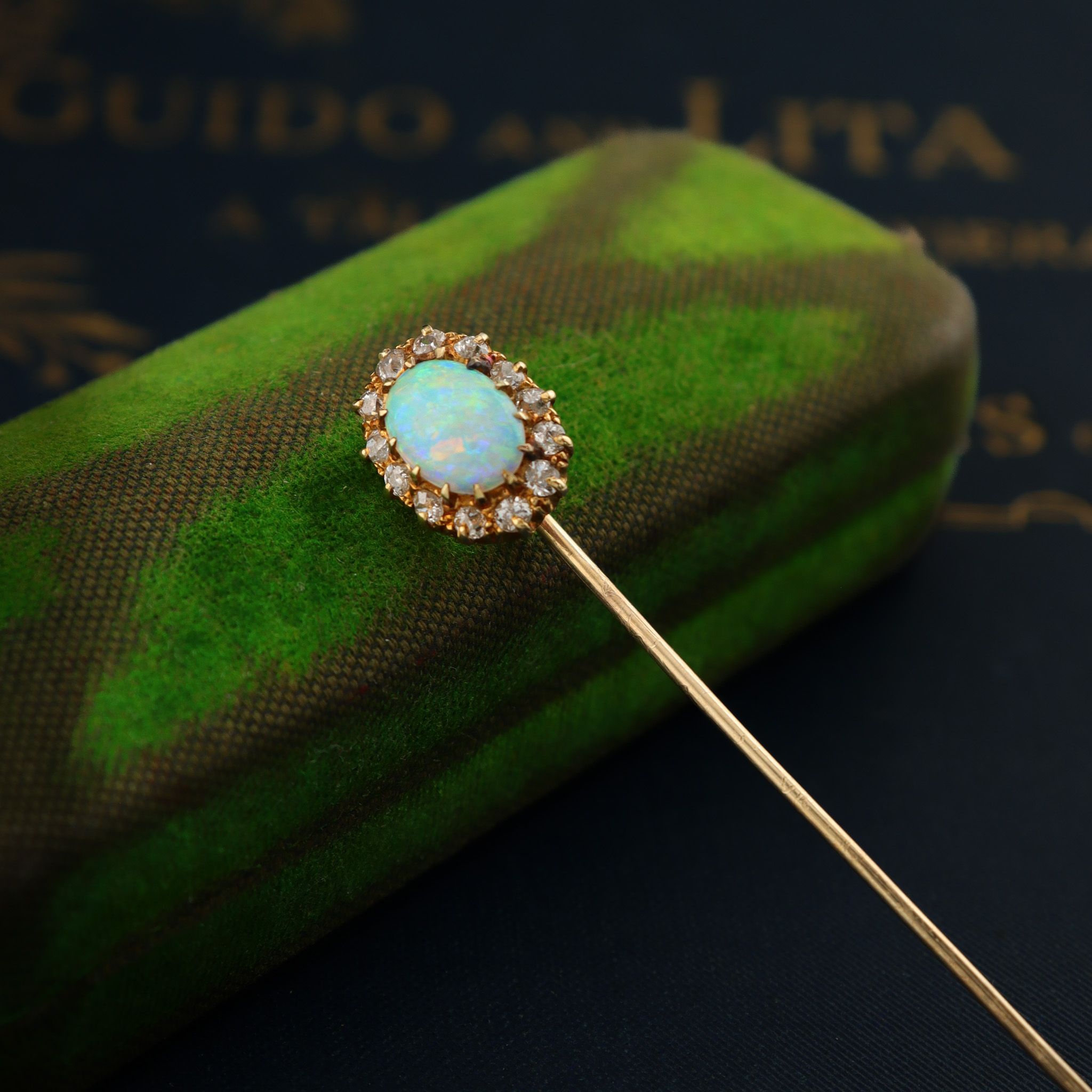
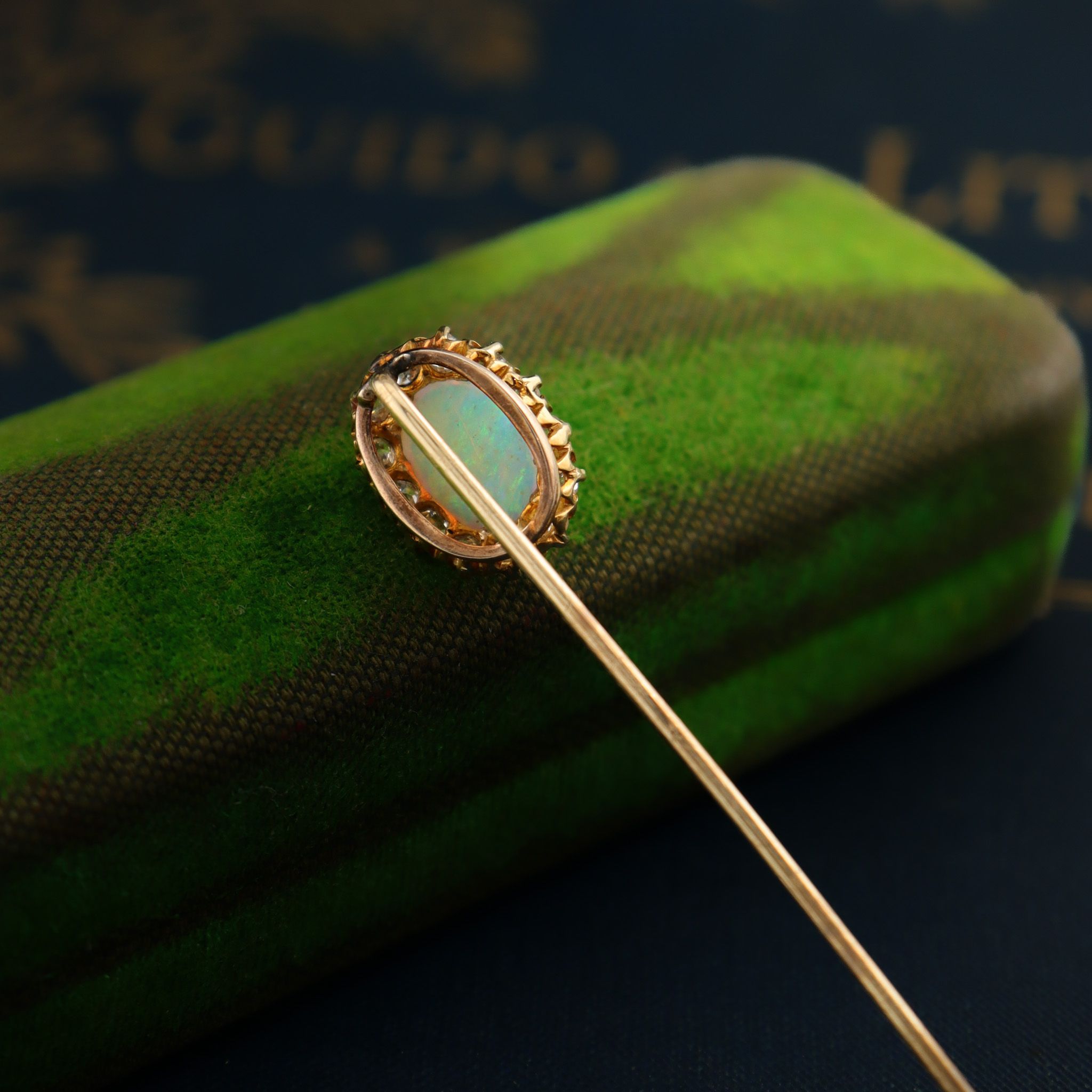
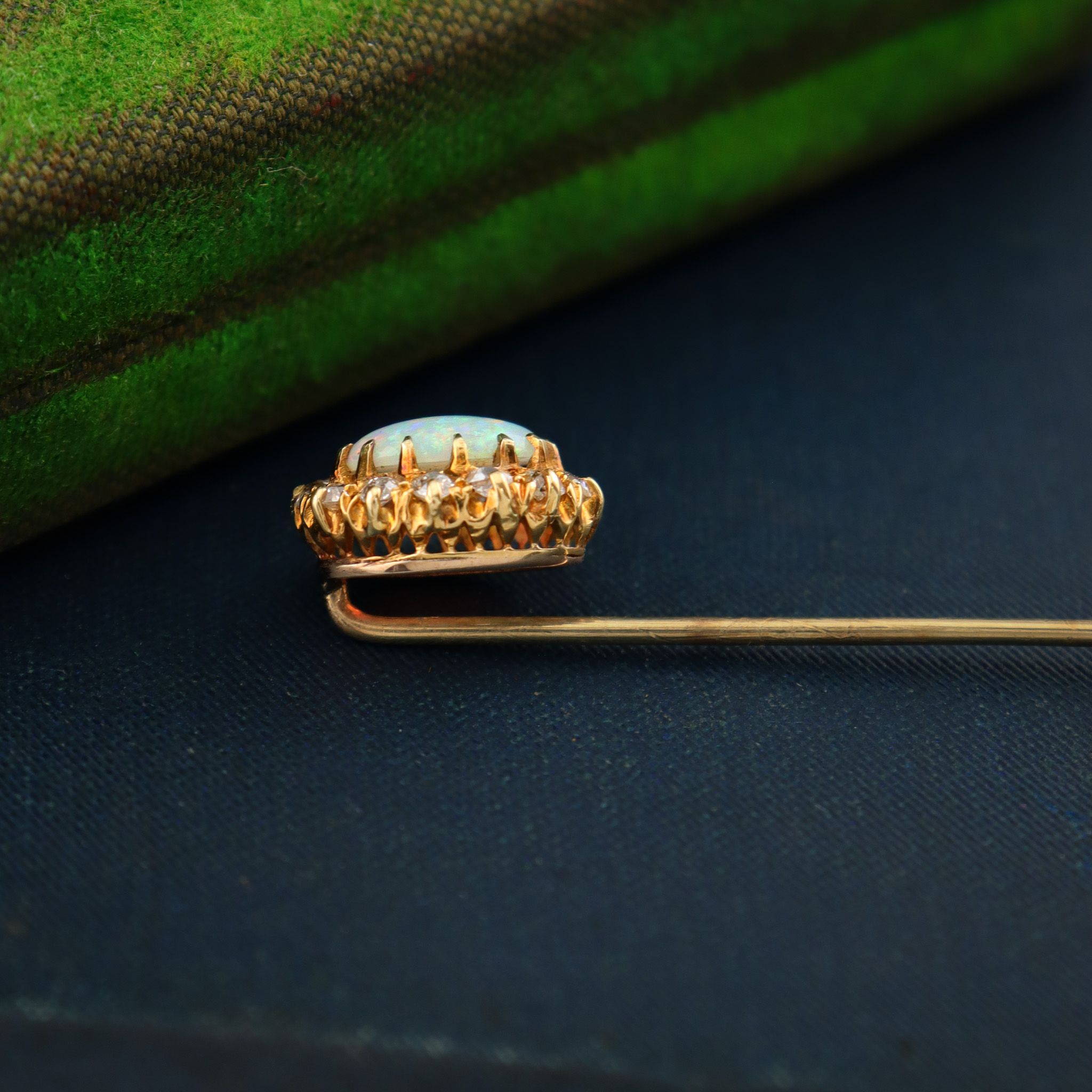
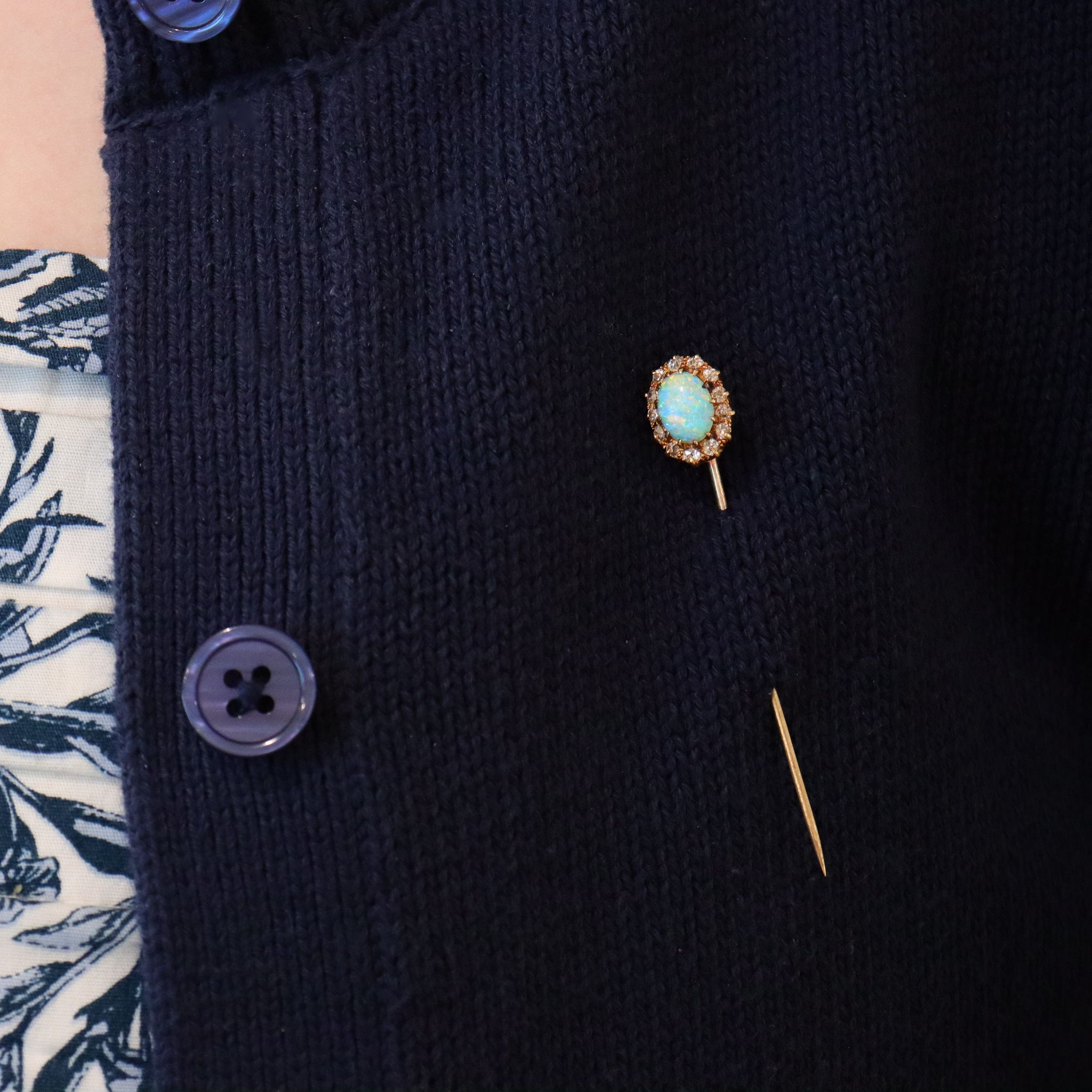
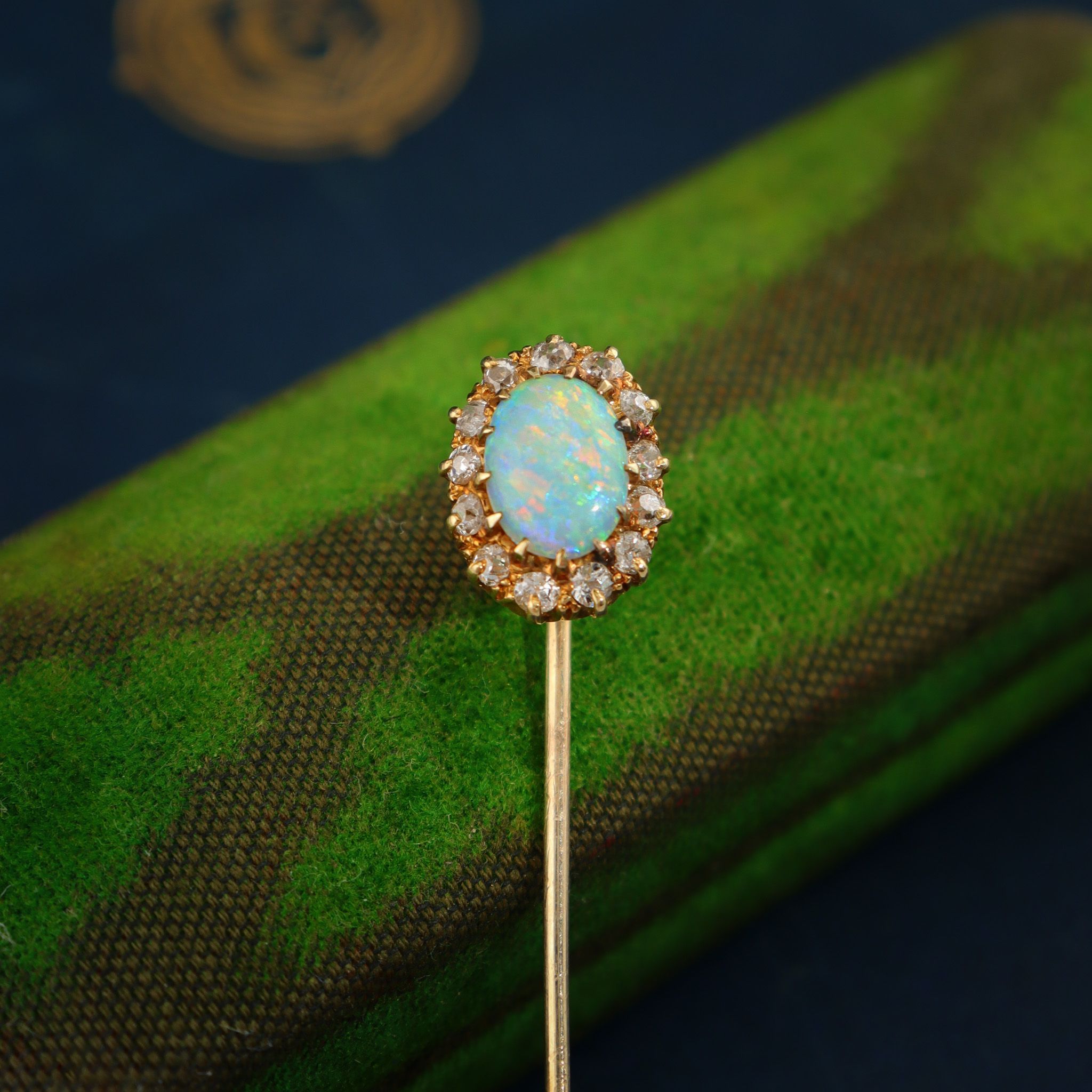
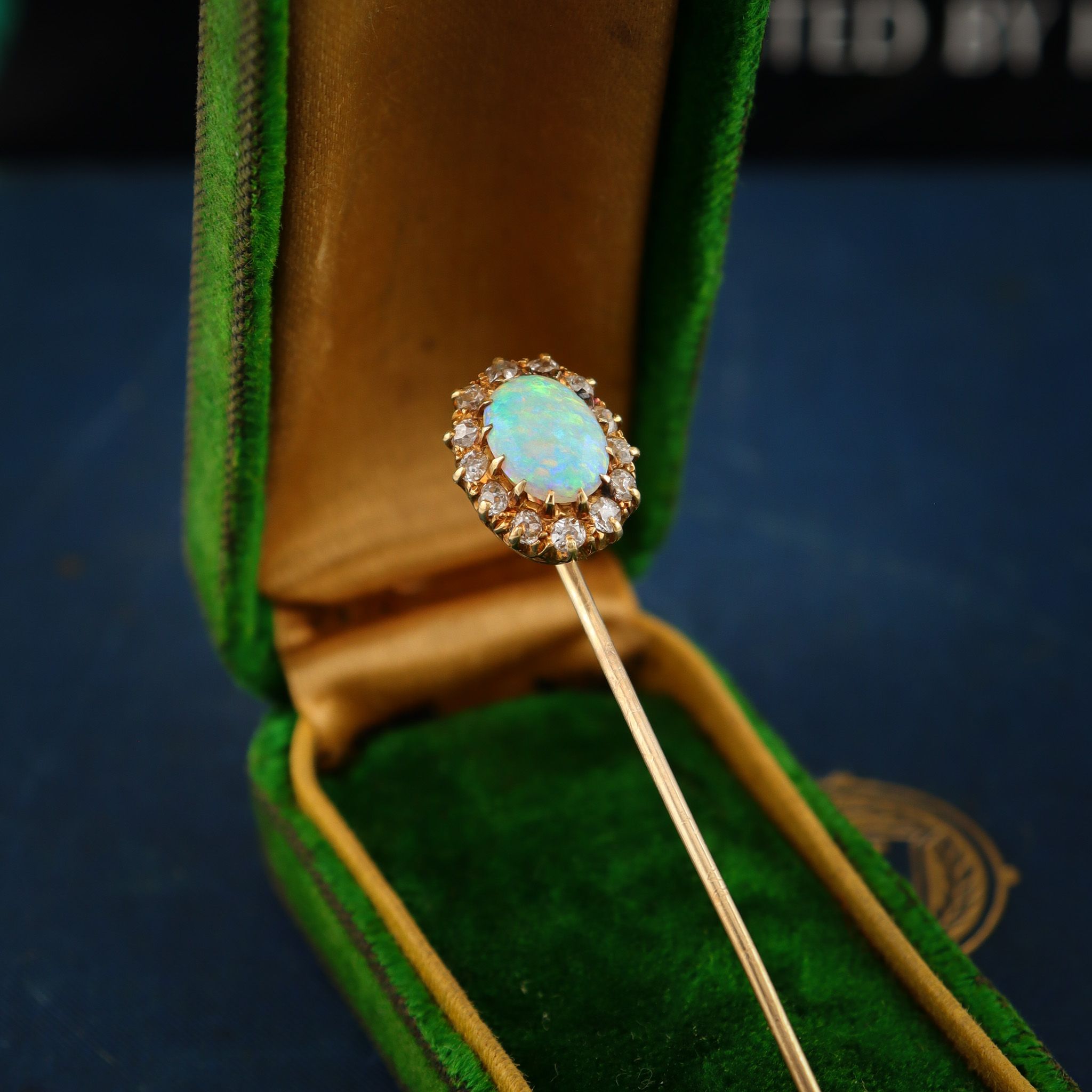
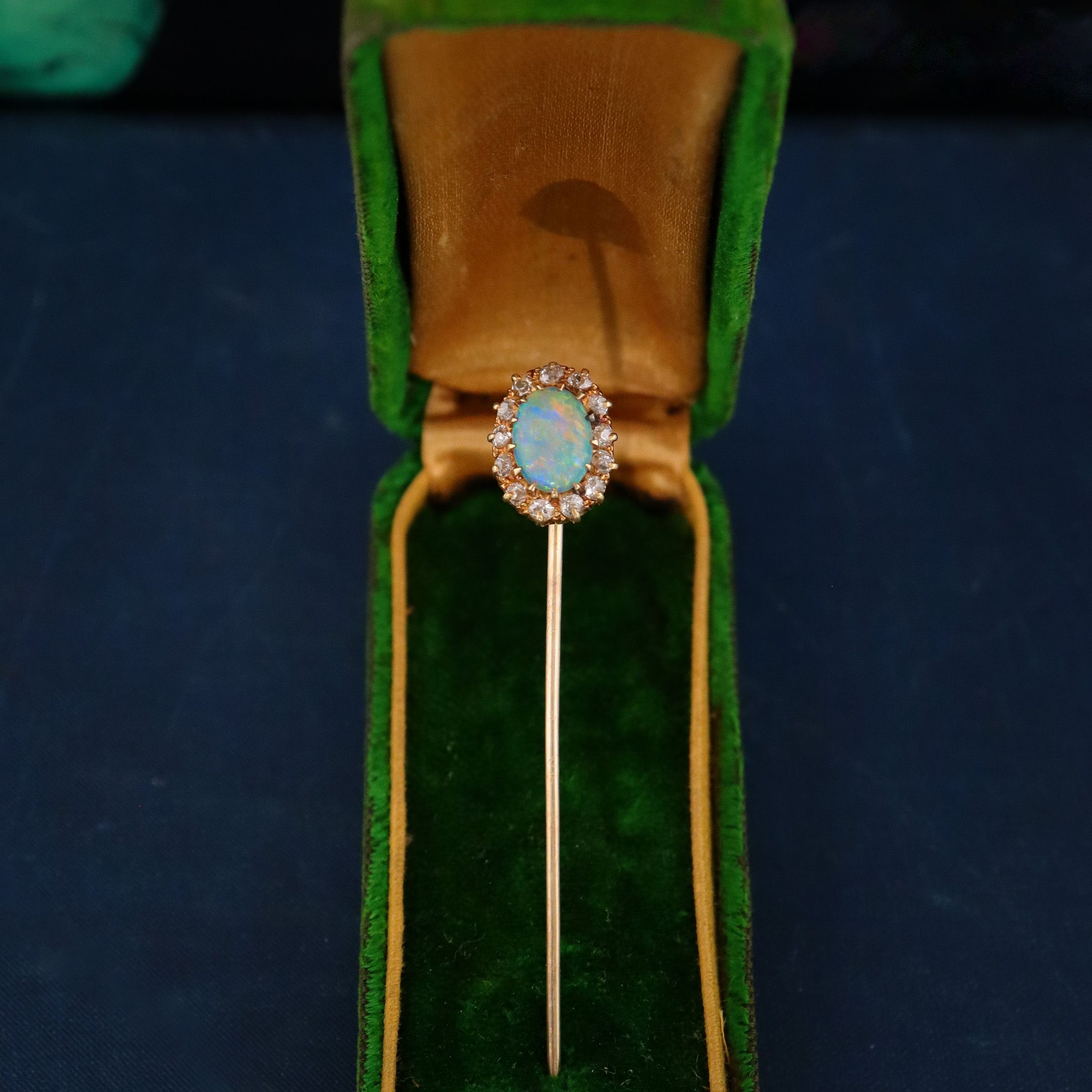
14ky Opal & Diamond Stick Pin

 or
 Qualify at checkout.
Details
Contact us to us if you want more details about this piece
Want to try it on? Come visit us at Halifax, NS
Victorian Era
(1837 - 1901)The Victorian Era consisted of three distinct periods. Starting with the Romantic Period, which spanned from 1837 to 1861, this period drew inspiration from the Renaissance, the Middle Ages, and the Natural World by using delicate, intricate designs. Gold was the standard material used in jewellery during the Victorian Era, and was often twisted into serpents, trees, lotus flowers, and birds.
Moving onto the Grand Period (1861-1885), jewellery pieces resembled a bolder design. Lockets, brooches, bracelets, and earrings became the staple piece for casual day wear. Mourning jewellery, often made with the hair of a deceased loved one, became popular after the death of Prince Albert in 1861. Queen Victoria often wore mourning lockets and other black jewellery (e.g., jet, onyx) during this time of grief.
The Aesthetic Period takes us from 1885 to the end of the Victorian Era in 1901. With women becoming more involved in business, politics, and sports, the desire to wear jewellery decreased. Instead, women opted for accessories that would keep their hands free, such as lorgnettes, watches, and long chains to hold their coin purses. When jewellery was worn, the items were much lighter to fit their active lifestyle. Motifs including hearts, bows, horseshoes, and crescents were prevalent in the Aesthetic Period.
In 1901, Queen Victoria’s passing brought an end to the era. Nevertheless, the jewellery designs of this era continue to captivate the interests of the modern world.Opal - – Hydrated Amorphous form of Silica