
9ct Opal & Garnet Ring
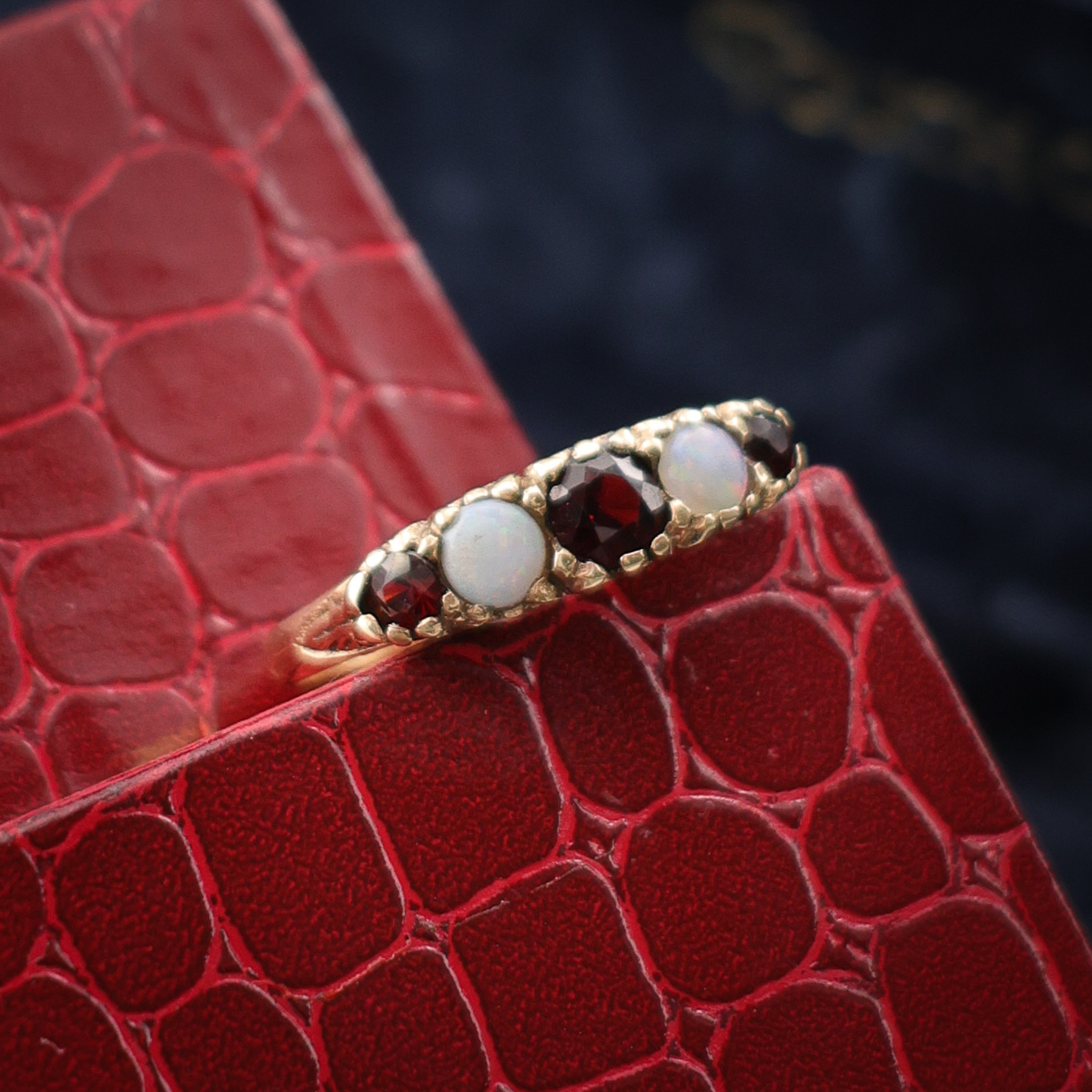
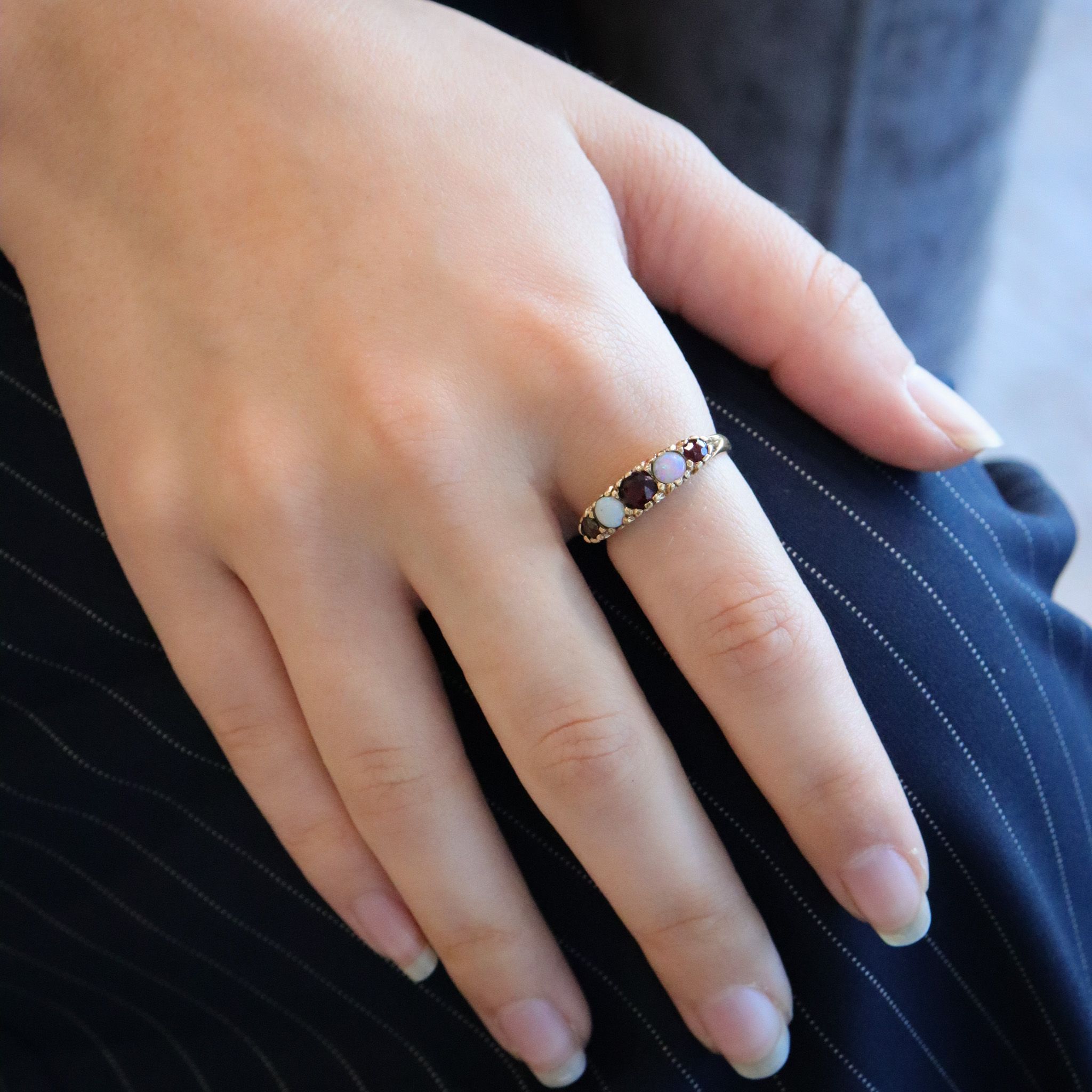
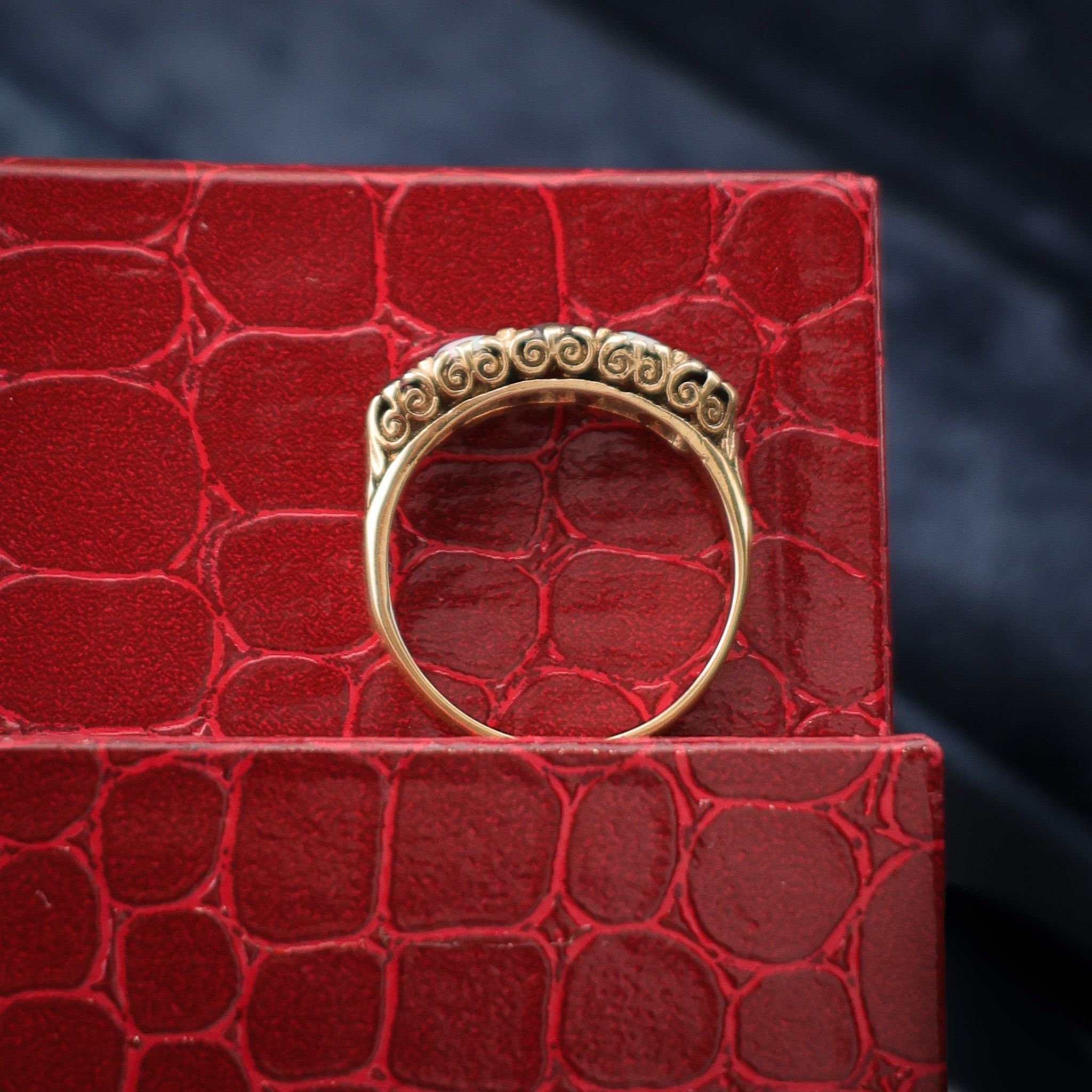
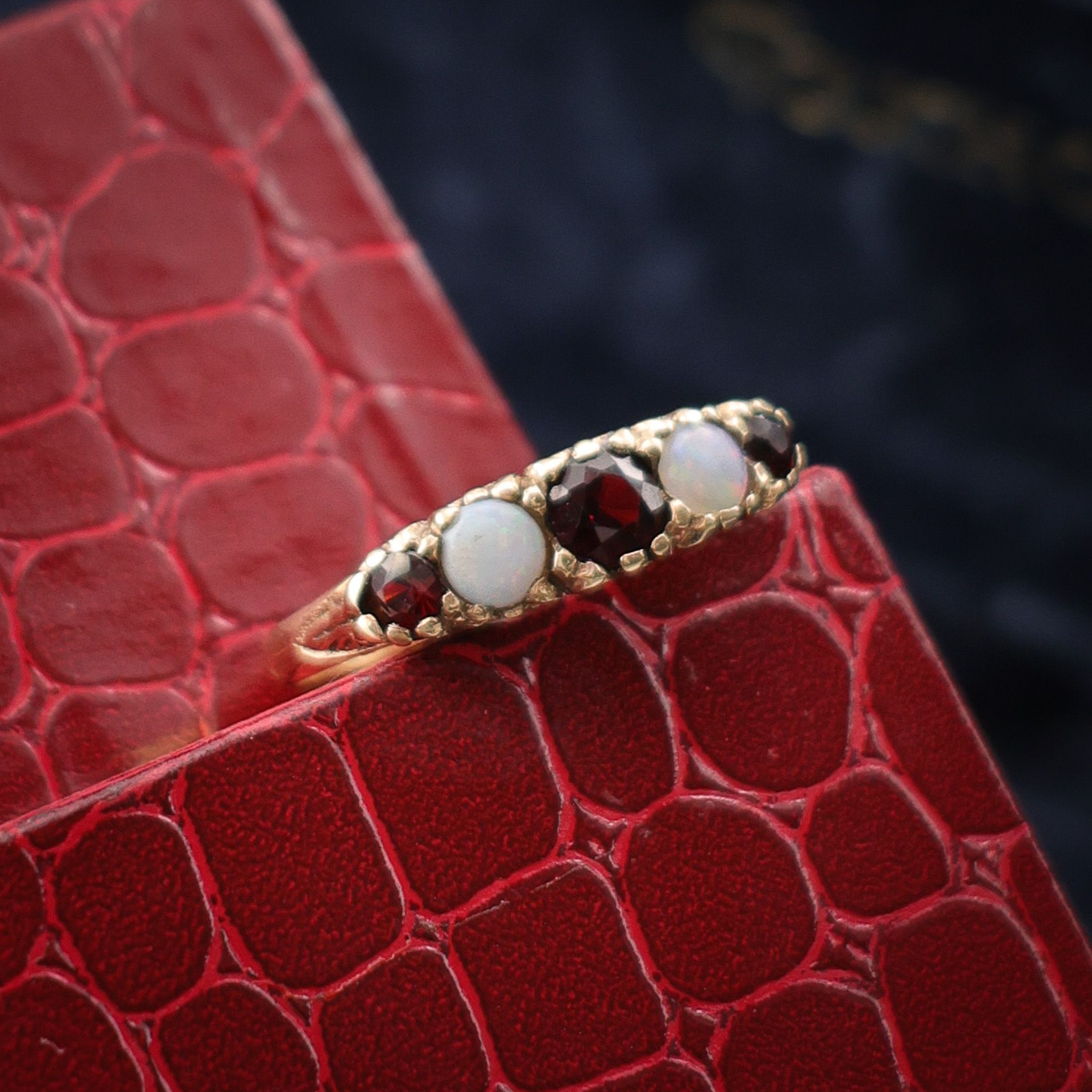
Details
Retro Era
(1940 - 1950)During this Era platinum and precious metals were once again rationed for the war effort. Making yellow gold the metal choice of the time. Various alloys were used to create thinner sheets of metal which gave jewellers a chance to experiment with new finishing techniques. With these new alloys came various shades of gold, sometimes seen in a single piece. Gemstones were also in short supply meaning a lot of pieces were made with more metal versus housing gemstones. Less expensive stones became more popular including topaz, amethyst, aquamarine and citrine. Diamonds were reserved for the use of pave settings and as accent stones. It was not uncommon during this time to commission a bespoke piece using metals and gemstones already owned.
Larger silhouettes were preferred in cocktail rings, necklaces and bracelets. Often featuring scrolls, fans and flowers, which was quite a contrast from the geometric lines of the Art Deco Era. Snake chains were popular as they gave a large, bold look without the use of as much metal. As the Art Deco era came to a close, society took a step towards the modern styles we see today due to the people beginning to view the Art Deco style as distastefully luxurious during the start of World War II.
Exchange and Return Policy
If for any reason you would like to return an item purchased from our showcase, it can be returned within 7 days, for a full refund, credited in the original method of payment, OR exchanged for store credit.
Proof of purchase is required, and item(s) must be in original condition (no indications of wear, alterations, engraving, etc.), and include any original packaging and paperwork (appraisals or certificates) that were included at the time of purchase.
Returns can be initiated in person at Brilliant Jewellery & Repair, or Brilliant Jewellery.
Discounted items, Repair Jobs, Custom Build Agreement pieces, items purchased during “Live Online Sales”, Gift Cards, and items that have been personalized or altered are final sale.
Warranty – Showcase Purchases
We take pride in selling heirloom quality pieces. All items are carefully inspected by our goldsmiths prior to being offered for sale.
Estate items are sold AS IS.
Items identified in our showcases as Brilliant Jewellery & Repair custom builds are eligible for the Custom Build Warranty, specified below.
Contact us to us if you want more details about this piece
Want to try it on? Come visit us at Halifax, NS
Retro Era
(1940 - 1950)During this Era platinum and precious metals were once again rationed for the war effort. Making yellow gold the metal choice of the time. Various alloys were used to create thinner sheets of metal which gave jewellers a chance to experiment with new finishing techniques. With these new alloys came various shades of gold, sometimes seen in a single piece. Gemstones were also in short supply meaning a lot of pieces were made with more metal versus housing gemstones. Less expensive stones became more popular including topaz, amethyst, aquamarine and citrine. Diamonds were reserved for the use of pave settings and as accent stones. It was not uncommon during this time to commission a bespoke piece using metals and gemstones already owned.
Larger silhouettes were preferred in cocktail rings, necklaces and bracelets. Often featuring scrolls, fans and flowers, which was quite a contrast from the geometric lines of the Art Deco Era. Snake chains were popular as they gave a large, bold look without the use of as much metal. As the Art Deco era came to a close, society took a step towards the modern styles we see today due to the people beginning to view the Art Deco style as distastefully luxurious during the start of World War II.